
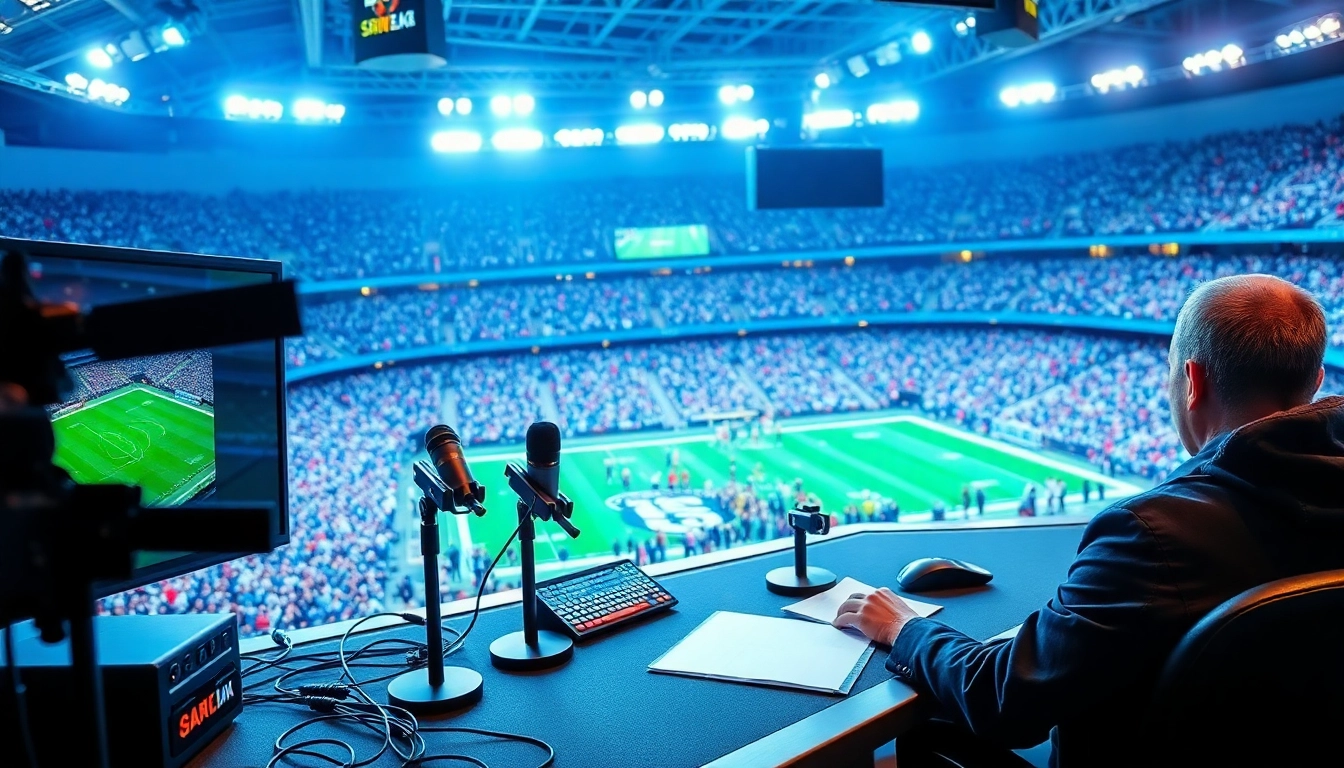
Understanding the World of Sports Broadcasting
Defining Sports Broadcasting
Sports broadcasting refers to the transmission of sports events through various media, primarily television and radio, but increasingly through online streaming platforms. This encompasses live event coverage, pre-game and post-game shows, highlight reels, and various analyses. The essence of sports broadcasting lies in bridging the gap between fans and their favorite sports, allowing them to engage in live experiences without being present at the venue. As our lifestyle evolves, Sports Broadcasting continues to adapt, catering to an audience that demands immediacy, accessibility, and interactivity.
Key Players in the Industry
The sports broadcasting industry is fueled by a myriad of stakeholders, each playing a crucial role. Key players include:
- Broadcast Networks: Traditionally, channels like ESPN, NBC Sports, and CBS Sports have dominated, offering comprehensive coverage of different sports.
- Streaming Services: With the rise of digital consumption, services like Amazon Prime Video, Hulu, and DAZN are reshaping how viewers access sports content.
- Production Companies: These firms, responsible for filming and editing, ensure high-quality visuals and audio to enhance viewer experience.
- Leagues and Teams: Major leagues such as the NFL, NBA, and Premier League often negotiate broadcasting rights, shaping the distribution strategy for their games.
- Advertisers and Sponsors: They play a pivotal role by funding broadcasts in exchange for brand visibility, often driving the content's focus and tone.
Historical Timeline of Broadcast Evolution
The journey of sports broadcasting is a fascinating evolution driven by technological advancements and changing viewer preferences. It began with radio broadcasts in the early 20th century, allowing fans to follow games in real-time through audio commentary. The advent of television in the 1950s brought sports into living rooms, creating a visual connection between the fans and the games. By the 1990s, cable television expanded broadcasting options significantly, while the 21st century saw the emergence of online streaming, fundamentally changing the landscape again. Now, augmented with social media integration and interactive experiences, sports broadcasting is poised for a dynamic future.
Essential Technology in Sports Broadcasting
Broadcasting Equipment and Tools
To deliver high-quality broadcasting, several technological components are essential. Key equipment includes:
- Cameras: High-definition and ultra-high-definition cameras capture the action with remarkable clarity.
- Audio Equipment: Multi-channel microphones and sound mixers provide clear commentary and fan engagement.
- Editing Tools: Software such as Adobe Premiere Pro and Final Cut Pro allow for quick editing of highlight reels and replays.
- Distribution Networks: Satellite and fiber-optic networks play a crucial role in transmitting signals to remote locations and ensuring minimal latency.
Software Innovations Enhancing Coverage
Innovative software solutions are transforming how sports broadcasting is executed. Graphics and data visualization software help create an engaging viewer experience, providing real-time statistics and insights during matches. Automated editing tools leverage AI to streamline the production process—enabling faster turnaround of clips and highlights. Another development is the integration of augmented reality (AR) into broadcasts, allowing viewers to see impressive visual effects and graphics overlaid on live action, enhancing the overall experience and engagement.
The Importance of High-Speed Internet
High-speed internet is a backbone requirement for modern sports broadcasting. With the rise of streaming services, reliable high-speed connections ensure seamless content delivery to a global audience. Low latency and high bandwidth are critical for live broadcasts, particularly in sports where every second counts. As the digital divide persists, ensuring all viewers can access high-speed connections remains essential for equitable sports broadcasting.
Content Creation Strategies for Sports Broadcasting
Engaging Viewers with Interactive Content
As audience engagement becomes paramount, interactive content strategies are gaining traction. Broadcasters are employing polls, quizzes, and live Q&A sessions to encourage fan participation during games. Such interactivity can enhance viewer loyalty and drive social media conversations. Moreover, gamification elements, such as fantasy leagues integrated with broadcasts, encourage viewers to stay engaged long after the game concludes.
Utilizing Social Media Platforms
Social media plays an indispensable role in sports broadcasting today. Platforms like Twitter, Instagram, and TikTok allow for instant sharing of highlights, fan reactions, and behind-the-scenes content that contribute to the overall narrative of the sport. Broadcasters use these platforms not only to promote their events but also to engage with viewers through conversations, live updates, and exclusive content that increases their stake in the games.
Best Practices for Real-Time Commentary
Real-time commentary serves as the pulse of sports broadcasting, providing audiences with insights and analysis as the game unfolds. Best practices include understanding the audience's knowledge level, providing context for nuanced plays, and adapting the tone based on the game's progression. Commentators should also strive for balance, offering a blend of statistical analysis and storytelling to keep viewers engaged and entertained.
Challenges Facing Sports Broadcasting Today
Competition from Online Streaming Services
The rise of online streaming services has introduced significant competition for traditional sports broadcasters. Viewers now have access to diverse options beyond cable TV, including on-demand programming and localized content. This competition compels traditional broadcasters to rethink their offerings, diversify their content, and enhance user experiences to retain viewers.
Adapting to Changing Viewer Preferences
As audience demographics evolve, adjusting to changing viewer preferences is a challenge. Younger viewers often prefer shorter highlights and bite-sized content, consuming on mobile devices. Broadcasters need to innovate and adapt their formats to suit on-the-go viewing, including shorter highlight clips and interactive segments designed for mobile-friendly platforms.
Regulatory Issues and Compliance
Regulatory issues can create significant obstacles in sports broadcasting. Different regions have varied laws regarding broadcasting rights, which can complicate national and international coverage. Compliance with advertising regulations, especially concerning sports gambling and health claims, adds another layer of complexity that broadcasters must navigate carefully.
The Future Landscape of Sports Broadcasting
Emerging Technologies: VR and AR
Virtual reality (VR) and augmented reality (AR) are emerging as game-changers in sports broadcasting. VR can create immersive experiences, allowing viewers to feel like they are part of the event from home. AR, on the other hand, can enhance the viewing experience by overlaying digital graphics onto the live game. These technologies provide unique opportunities for broadcasters to attract younger viewers seeking more interactive and engaging content.
Personalization in Broadcasting
The future will see a growing trend towards personalized sports broadcasting experiences. Viewers will have options to customize their viewing preferences, including choosing different camera angles or selecting specific commentators and graphic overlays. This tailoring will elevate the viewer's connection to the content, making them feel more invested and involved in the outcome of the games.
Sustainable Practices in Sports Broadcasting
As the global conversation around sustainability intensifies, sports broadcasting must address its environmental impact. Practices such as reducing carbon footprints associated with travel for events, utilizing energy-efficient technologies, and promoting sustainability stories during broadcasts are vital. They not only demonstrate a commitment to responsible broadcasting but also resonate with a growing audience that prioritizes environmental responsibility.
Frequently Asked Questions (FAQs)
What is sports broadcasting?
Sports broadcasting encompasses the transmission of live sports events through various media, enabling fans to experience games they cannot attend in person.
How has technology impacted sports broadcasting?
Technology has revolutionized sports broadcasting by enabling high-definition visuals, interactive experiences, and real-time data analysis through innovative tools and software.
What are the challenges sports broadcasters face?
Sports broadcasters face challenges from streaming services, adapting to viewer preferences, and navigating regulatory issues that can impact broadcasting rights and content.
What role does social media play in sports broadcasting?
Social media enhances sports broadcasting by providing a platform for real-time engagement, fan interaction, and sharing of highlights and content across different demographics.
What is the future of sports broadcasting?
The future of sports broadcasting is likely to be shaped by emerging technologies like VR/AR, personalized viewer experiences, and sustainable practices that cater to a more environmentally conscious audience.